A Steel Building Website Getting Rebuilt for Mine Sites, Not Dream Homes: Steel Domes
Steel domes refer to self-supporting, curved architectural or industrial structures engineered from high-strength steel to span massive spaces without internal columns.
Is your website talking to the wrong customers?
James sells all-steel arch buildings and wants them on mine sites and farms. His website was getting good enquiries but no sales, but it was still telling Google it sold dream homes. I’m rebuilding the site for the buyers he actually wants.
The brief
James Hallam runs Steel Domes, which designs and makes all-steel arch buildings in Wattleup, south of Perth. The arch holds itself up, so there are no posts inside, just floor. They are ideal for mine sites up north and on farms across WA.
A few people were filling in the website’s form, but few were turning into sales. They were mostly tyre-kickers looking for cheap homes.
Did I have any ideas? James asked. As usual, I had a few. But had to research the subject first (thanks, Claude).
First I needed to know why.
The site was built in 2023 by an overseas agency that has since closed. Nobody has been looking after it since, and it showed.
What we found
I went through the live site and its plugins page by page in July 2026.
- Every page I checked was selling dream homes. The Home, Mining and Contact pages all give Google the same description: “Build Your Dream Quonset Home.” That’s the summary Google is handed for the Mining page.
- Homes first, mining fifth. The menu opens with Residential, and the first page under it is Homes. Mining sits under the fifth menu item. The projects that prove Steel Domes does industrial and farm work were filed under News.
- Forms that couldn’t tell a mine from a backyard. The contact form asks for a name, a town, an email, a phone number and a message, next to the heading “Build Your Dream Quonset Home”. The Mining page’s “Price A Building” form asks for a width, a length and a choice of Model Q, S, X or A, which are explained on a different page. Neither form asks what the building is for or where it’s going.
- Frozen in May 2023. The Mining and Contact pages were last edited in May 2023, and the plugins hadn’t been updated since about then. A setting in the site’s configuration blocks updates from the WordPress dashboard, so they couldn’t be updated the normal way.
- Three tools building one layout. Elementor builds the pages, while Elementor Header & Footer Builder and ElementsKit Lite both build headers. Two layers of caching sat on top, so an edit could save correctly and still not show up on the page.
- Left behind by the builder. The custom theme has no newer version to move to. The Gravity Forms licence belonged to the agency, so the forms no longer get updates. Their credit is still in the footer of every page.
None of this was James’s doing. A site built to look good at launch and then left alone ends up like this. But a site manager pricing a workshop for a remote mine reads “dream home” and keeps looking.
What we’ve changed so far
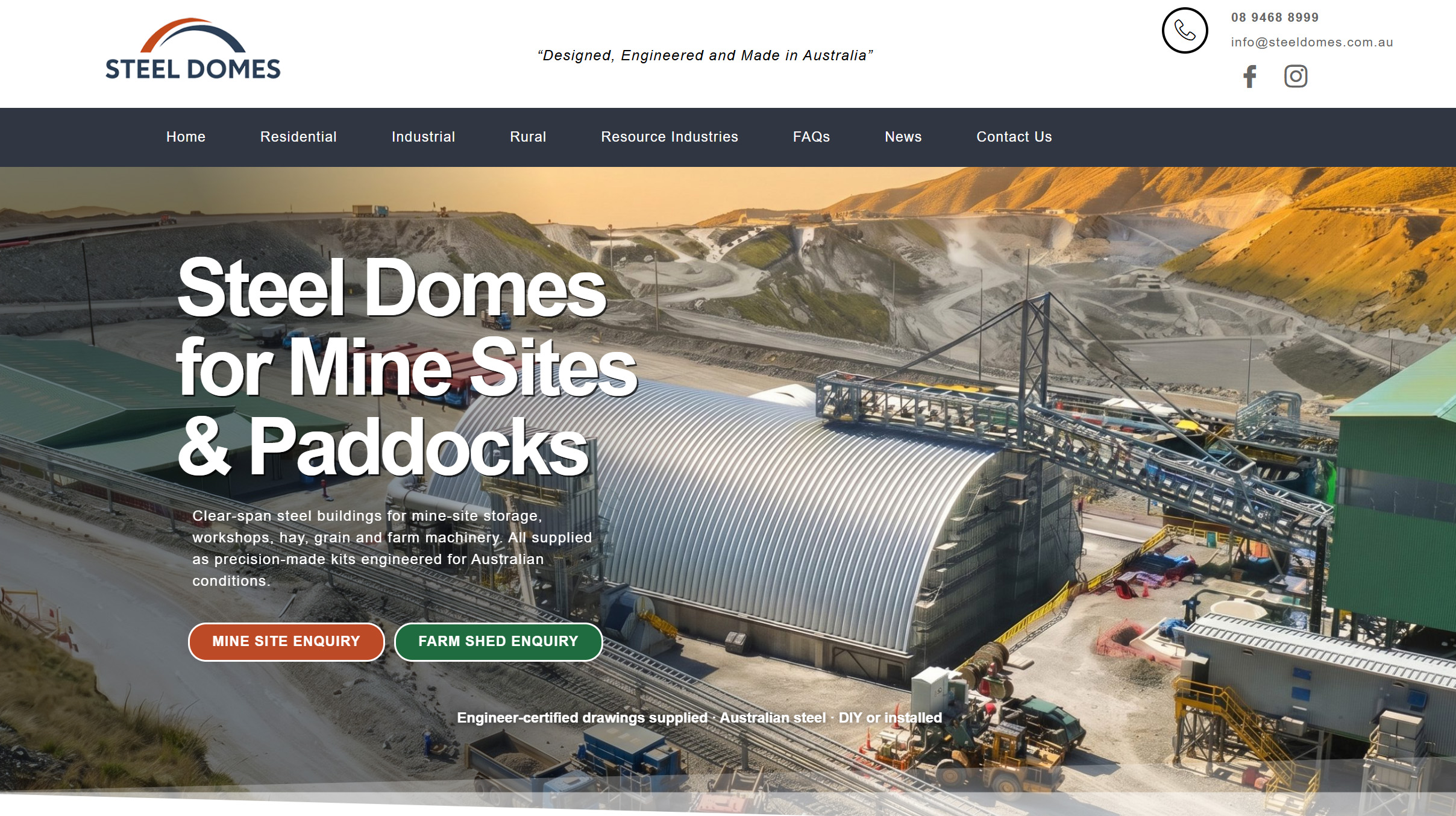
- The home page first, inside the old site. It now opens with “Steel Domes for Mine Sites & Paddocks” and separate buttons for mine-site and farm-shed enquiries. The logo and header were fixed in the same pass. It took far longer than it should have, because every change had to get past two header builders and two caches. That told us what the rest of the site would cost.
- Patch or rebuild, priced both ways. I gave James a scoped estimate to bring the old site up to date, with a point where we’d stop and check before going further. Plugin updates would come first and the PHP upgrade last, on its own, because the site compiles its styles live on the server and runs custom code from a snippets plugin. I priced a clean rebuild alongside it. James chose the rebuild. The rebuild will be cheaper than updating the original outdated website.
- No page builders. The new site is being coded by hand for this one business, so there is one tool deciding what each page looks like.
- Who else the buyer is pricing. I looked at who a WA buyer compares Steel Domes with: fabric dome shelter suppliers, cyclone-rated shed builders and kit exporters. The new home page answers fabric shelters directly, with a side-by-side: all steel, not fabric over a frame.
- Mining and farming, side by side. The new home page splits straight into Mining & Resources and Farming & Agriculture. Workshops, equipment storage and relocatable buildings on one side; hay, grain and machinery sheds on the other. Homes aren’t on it.
- A form that asks about the job. Industry, the site’s town or postcode, what the building is for, rough size, and a timeframe from “just researching” to “ready to discuss”. James can tell a mine-site workshop from a weekend idea before he picks up the phone.
- Real jobs, up front. The Metsel batch plant (four domes, each 18 metres by 12) and Cutts Engineering’s 550 m² machinery shed move from under News to the home page.
- Kept off James’s domain until it’s ready. The new design is being built at geoffrey.com.au/sd2/, so a half-finished page isn’t competing with the live site in Google.
Where it stands
Construction of the new site starts later in the year – in November 2026. There are no sales figures to report yet. What can be checked now:
- the live home page leads with mine sites and paddocks instead of dream homes
- the new enquiry form asks what the building is for and where it’s going, which neither old form did, and
- James made a costed choice between patching and rebuilding before spending money on either.
The real test is whether enquiries turn into sales. On the new site, every enquiry will be recorded at the back end with its industry, so we’ll know which buyers are coming through, and James can tell us which ones become orders. I’ll add the first three months of figures here after launch.
If your website gets enquiries that never turn into work, here’s how I approach a rebuild, or ask for a callback.