A Tradie Website That Explains Every Job: Myaree Garage Doors
Rod Cross runs a garage door business in Perth's southern suburbs. His old website squeezed 9 services onto one page (24 words each) mostly copied from the home page. I rebuilt it with a page for every job.
The brief
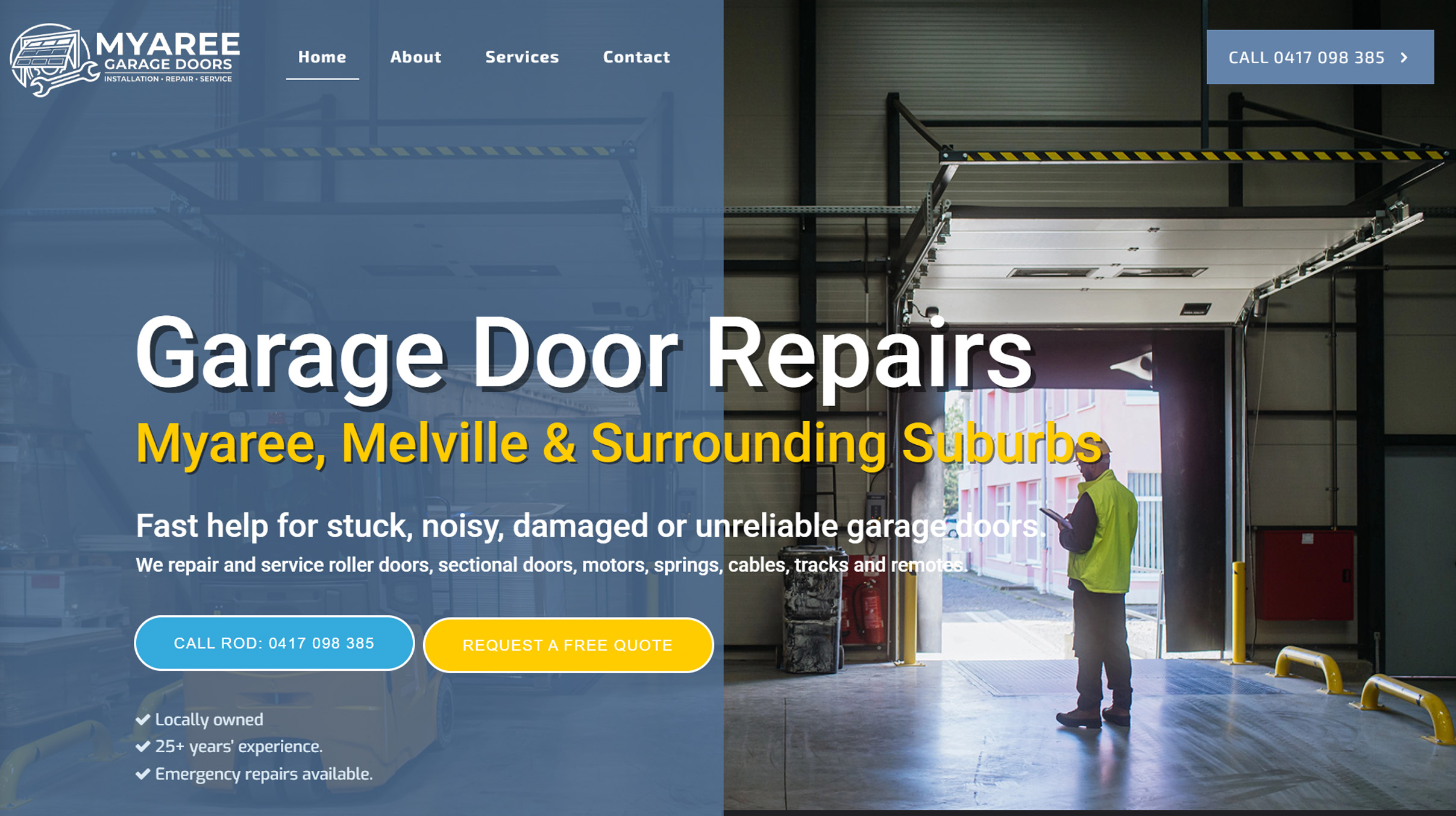
Rod Cross runs Myaree Garage Doors, repairing and servicing sectional and roller doors across Myaree, Melville and the surrounding suburbs. He’s an honest, straightforward tradesman with more than 25 years in the trade, and he needed a website that came across the same way: clear, professional and easy to call from.
I met Rod a few years ago and I built a website for his partner who worked in the mining industry. Rod came to me after sitting on a website that he had built overseas. He was never happy with the site and remembered his good experience when working with me on his parter’s mining and acquisitions website.
What we found
I measured the old site from a backup of its database taken in March 2026, so these are counts, not impressions.
- Nine services on one page. Everything Rod does was squeezed onto a single Services page, at an average of 24 words per service. That’s not enough to tell a customer what the job involves, or why Rod is the right person to call. It’s also not enough information for search engine crawlers.
- Copied text. 14 of the Services page’s 15 sentences also appeared on the home page, so clicking through to Services told a visitor nothing new. Search engines read it the same way: two pages with the same words, and no reason to rank either.
- Placeholder text. The About page still carried the theme’s sample wording (“Your text goes here…”) seven times.
- Pages that weren’t about garage doors. The site was built on an online-store theme, and its Shop, Cart, Checkout and My Account pages were live, along with WordPress’s sample page and “Hello world!” post.
None of this is unusual, and all of it is easy to miss at launch. But a customer comparing two garage door repair firms notices it, and it undercuts exactly what Rod is selling: that he does the job properly.
What we changed
- A page for every job. Seven service pages replace the one: Garage Door Repairs, Emergency Repairs, Spring & Cable Repairs, Motors & Remotes, Servicing, Sectional Doors and Roller Doors. Each averages more than 1,100 words.
- Written around the customer’s problem. The Spring & Cable Repairs page, for example, starts with the warning signs (a loud bang, a door that strains or stops partway, a frayed cable), explains what happens when you call, and answers the questions people actually ask about cost and timing.
- Safety, said plainly. Garage door springs are under serious tension, so the home page says so before it says anything else about repairs: “If a door is unsafe, jammed or under tension, don’t force it. Call for advice before attempting repairs.”
- Local, because Rod is. Myaree and Melville are named on every service page, and the advice is local too: the spring page has a note for homes built near the river.
- Every page says something new. Only 6% of the sentences on the new service pages appear anywhere else on the site.
- Rod, front and centre. The main button reads “Call Rod”. Customers are ringing a person, not a call centre, and the site should say so.
- Nothing left over. No shop pages, no sample text. The site is hosted and maintained by Geoffrey Digital, so it stays that way.
The result
The new site went live in September 2026. What can be measured now is in the project file:
- seven service pages instead of one
- around 1,100 words about each service instead of 24, and
- duplicated service text down from 93% to 6%.
Search rankings take a few months to settle after a rebuild, so I’m not quoting traffic numbers yet. I’ll add Search Console figures here in early 2027, comparing the same months before and after launch.
If your website describes your whole business in a few lines, here’s how I approach a rebuild, or ask for a callback.
Great job, Edwin. Very thorough research and good, honest presentation. Thank you very much.